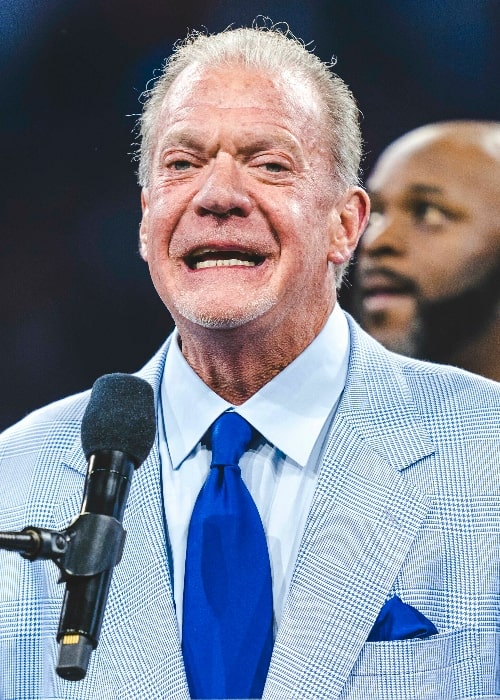
Jim Irsay, the late owner of the Indianapolis Colts, was a prominent figure in the NFL who did, to some extent, acknowledge his personal battles with addiction and mental health challenges. Irsay recently passed away from many health struggles. We see his many years in the public eye as a missed opportunity, and he diverted attention away from real mental health problems by blaming others. While he did start an initiative “Kicking The Stigma,” Irsay himself blamed physical injuries and his own fame for his mental health struggles, minimizing them for the non-wealthy and non-famous. While he is one of the few celebrities to even acknowledge a continuing struggle with mental health, there remains a conversation about the depth and breadth of his advocacy and whether more could have been done to effect systemic change.
Acknowledging Personal Struggles
Irsay has revealed in 2014 that he had been to rehab over 15 times and had a near-fatal overdose that left him “code blue”, although not much followed in the subsequent years. That is certainly honorable in and of itself and was big news when it was revealed more than a decade ago. In 2020, Irsay and his family launched “Kicking The Stigma,” a campaign aimed at raising awareness about mental health disorders and removing the associated stigma. Through this initiative, the Irsay family committed over $17 million to expand mental health treatment, research, and awareness in Indiana and across the United States . They also donated $3 million to Indiana University to establish the Irsay Institute, focusing on researching and addressing the stigma surrounding mental health.
Missed Opportunities
Irsay inherited a professional football team from a demanding and difficult father, and his mental health struggles have been the subject of news stories for years. No one knows what anyone goes through on the inside, even the rich and famous (or especially the rich and famous). He could have talked about that in interviews or written a book, because those personal issues are very common in today’s world. He did not ever take a stand publicly to explain how he dealt with these issues, instead covering it up through empty initiatives where he donated a relatively small amount of money. While the public think he was public, he really was not, instead blaming football injuries and being improperly arrested in 2014 because he was a “white, rich billionaire”. He could have used his platform as a wealthy and famous person struggling with the same issues as regular people to talk about his own family life, marital struggles, or the emptiness of fame. While he should get credit for even acknowledging his struggles, he could have done more.
Impact and Reach
It is good to know that the “Kicking The Stigma” initiative has had a tangible impact, as it has been reported that Irsay Institute at Indiana University has become a hub for interdisciplinary research. But the NFL is ubiquitous in pop culture, and anything that is done there is amplified across the media landscape. Imagine if Irsay had advocated for mental health resources for everyone in Indiana, and took blame when he was arrested in 2014 rather than blaming surgery and profiling as he did. Or he could have spoken up about players who retired for personal reasons like Andrew Luck. He never said that Andrew’s decision to pursue other opportunities may have been mentally healthy for him, rather he stated how “heartbroken” he was and even tried to stop other teams from contacting him about a comeback. While it is unknown whether Luck struggled from something similar as Irsay, the world will now never know because Irsay never said anything (maybe Luck will one day). Anything the famous quarterback and Irsay said about mental health would have gone a long way to kicking the stigma, yet all that was done was to give money.
Legacy and Reflection
Jim Irsay’s initiatives have opened doors for conversations about mental health in sports and beyond. However, his passing invites reflection on the importance of sustained advocacy and taking ownership of one’s own struggles. Future efforts might focus on building upon his foundation to enact broader policy changes and ensure that mental health support is accessible and effective for all.
 Famous Healthy Minds